Civil Engineeering, BatterySystem

Our Mission: ESTABLISHING AN INDUSTRY-BASED TRAINING PROGRAM forr children who want be an eagle.

Our Vision: PROVIDE A GUILDLINE TO ESTABLISH YOUR PROFESSIONAL DREAM COMES TRUE.

   Cook Engineering, Inc.     245 E Main Street, #116, Alhambra, CA 91801    

                                                                 For information you need, please email to: : cookengineers@gmail.com


免责声明:本文内容源自网络,版权归原作者所有,如有侵犯您的原创版权请告知,我们将尽快删除相关内容。


National Electrical Code Article 705 (Thanks Tesla who drop the battery pricei which makes the year of 2020 very special)


Comminication Protocol : Modbus or Modbus RTU

4.1.1 PCS MMI specification:


Electrical Data:

1.     Single Line display

2.     AC  Utility Meter informations

3.     DC system information if any.

4.     Breaker status if any.

5.     Operating temperature

6.      Humidity

7.      Harmful or hazardous gas detaction.

8.     Battery management system status

9.     Solar system status.


Overview Graphic Display shall include:

1, System working models

2. Electrical meter information

3. Equipment information of the battery container.


IMPLEMENT SPECIFICATION

 4.1 Power Control System PCS Specification


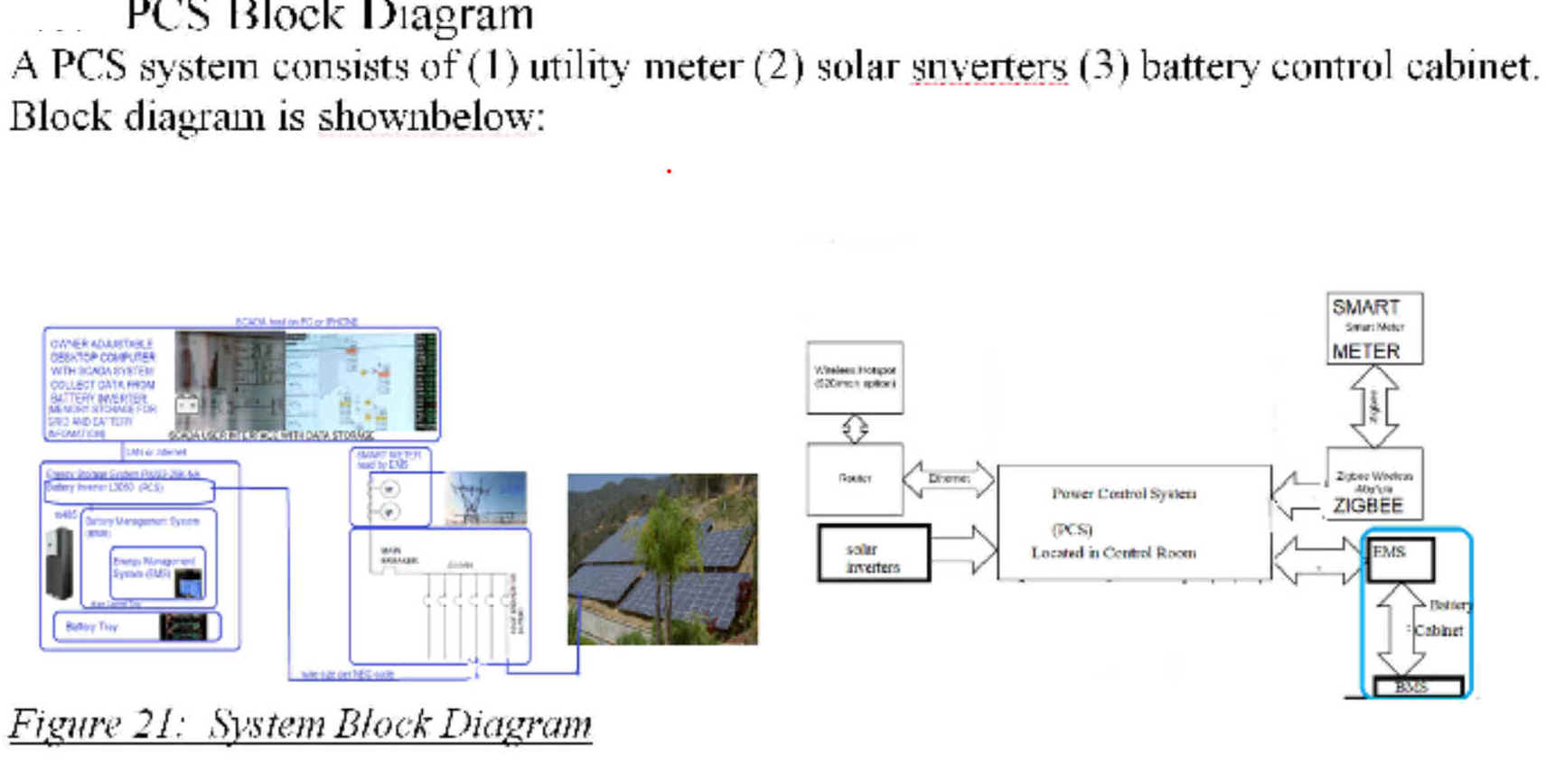
The purpose of the PCS is to control the power consumption from the utility company.  Read the real time data from the power meter, compare with the Fluke measurement devices, then adjust the battery discharge current vis EMS. In according to preset value as shown on figure 2.2.1.   The priority of the PCS is (1) Provide limited power for the production lines. (2) Peak shave the extra demand current to save on utility bill.


PCS to be installed in a computer monitored room, include man-machine interface computer (MMI),  utility interface software modules, solar inverter data acquisition module, EMS control/monitoring module.


The battery management system (BMS) to be purchased from the battery manufacturer company, the function of BMS is defined in section 3.4, include a space available for EMS box which is installed by the contractor. 


The purpose of EMS is taking order from the PCS, and controlling the BMS.  Functional spec of the EMS is defined in section 3.5.


NEC Section 705 wnr Section 712 Mocrogrid or Grid connected sysems are intened to be covered.
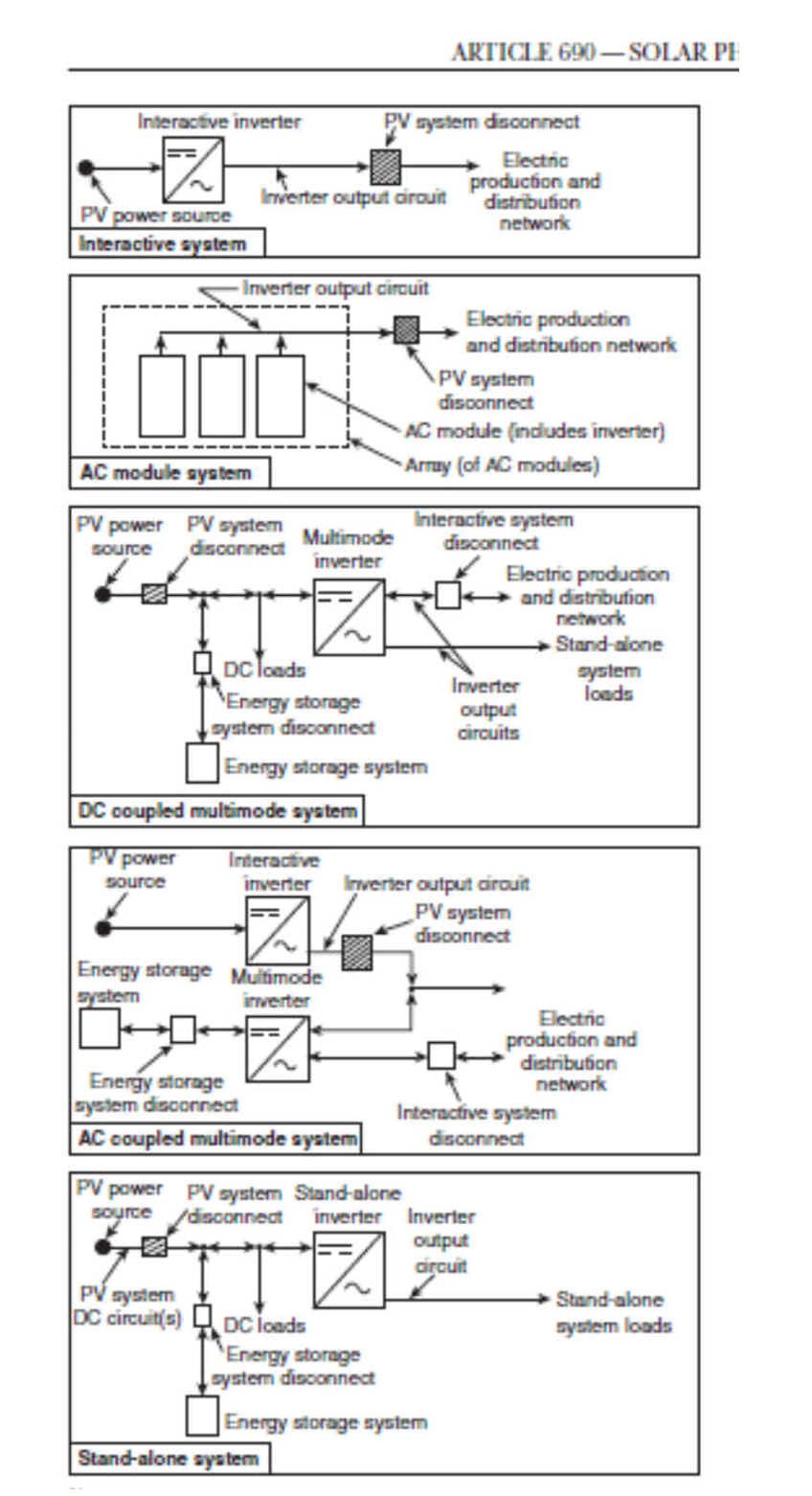
 

2019 California Electrical Code Revise – Article 690

Solar System Code chapter 690 started at tesr of 1984 version of NEC code, far before the solar system availalbe in commercial market 25 years.  The prediction of the solar system application was layout and releated code are available at then.


Should you get a professional engineer stamp? According to the National Society of Professional Engineers (NSPE), government agencies, educational institutions, and private industries are requiring contract work with licensed professional engineers in greater numbers today. Not only is a PE Stamp of higher demand, it also shows that you hold your work to a higher standard. So, in other words, yes, you should.

A 2012 Complaint and Inquiring Statistics report from the Better Business Bureau (BBB) shows there were 3,205,409 inquiries into the business practices of roofing contractors, the highest number of all industries that year. With such dissatisfaction in the industry, it’s important to show your dedication to the quality of work—and a professional engineer stamp can do just that.

Here are 5 reasons to get a PE Stamp:

1. Ensure the System Will Perform 

According to NSPE, professional knowledge is best demonstrated when a PE has been retained by the contractor, “and is personally aware of a project's scope, needs, parameters, limitations and special requirements.” It takes many years of education and experience to become an engineer—having that qualified person back your work shows your dedication to its quality.

2. Gain Government Approval

The National Council of Examiners for Engineering and Surveying (NCEES) explains, “Professional licensure protects the public by enforcing standards that restrict practice to qualified individuals who have met specific qualifications in education, work experience, and exams.” These qualifications for licensure are regulated by state. When a PE backs your project, the state will easily recognize its legitimacy and give approval.

3. Shift Responsibility 

A PE Stamp carries the weight of a professional engineer’s approval. Along with that, the engineer is stating that he or she will be responsible for the integrity of the system. Let’s say you had a cold for a few weeks and were positive it was a respiratory infection, so you go to your doctor. However, your doctor says you have cancer and begins aggressive treatment. When you eventually find out you only had an infection, the fault isn’t yours, it’s the doctor’s. By placing your trust in a PE, they become responsible for your project’s integrity. As they should—like a doctor, he is an expert in the field.

4. Gain Credibility

According to the National Society of Professional Engineers, a PE Stamp demonstrates that a professional engineer placed his or her “registration seal on any drawings, designs, plans, descriptions and/or specifications that he or she did not author or for which he or she did not have personal professional knowledge and direct supervisory control and responsibility.” Project officials concerned with structure integrity and state requirements will be impressed by a PE Stamp.

5. Meet all Local and State Codes

Professional engineers must go through a lengthy process while analyzing plans and submitting approval to the state. PEs are more familiar with state codes and regulations and will be able to guarantee your system meets all requirements. In the case that it doesn’t, PEs will know how to bring your project up to code and earn their stamp of approval.